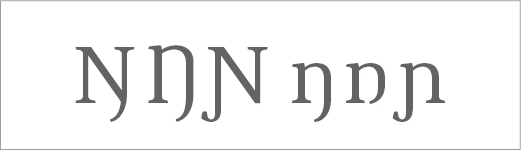
I'm developing a font with large language support. The Eng uses a typical combination: N with J-descender (still a bit fat at the junction, I will fix it). The same for eng, based on n with j-descender. The design is is also coherent with other glyphs:

Eng and other glyphs with J descender.
Hausa and other West African languages uses a glyph defined by Unicode as N with left hook. In all fonts with this glyph (there is a demo list here) it is build the same way as Eng, just with J-descender at the left.
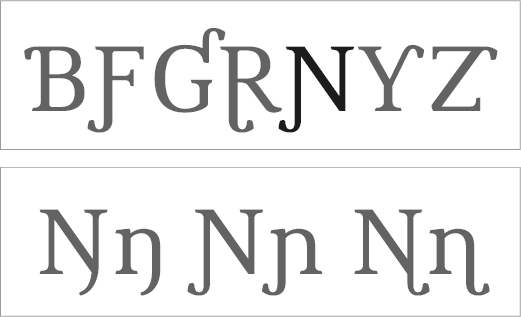
As the glyph is supposed to have a hook, the J-descender solution may be incorrect in my font as its shape cannot be considered a hook –actually, it's very far from this. So, I designed it with a real hook:

Eng, N with left hook and N wit left J-descender.
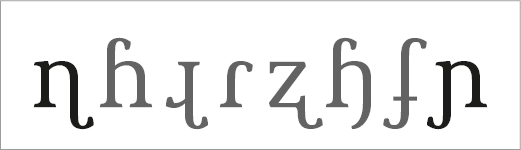
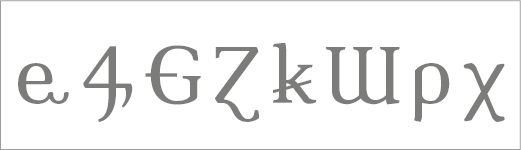
There are many other glyphs with hooks in a variety of positions. Almost all came from African languages and are in Latin Extended-B block of Unicode. I designed them always with the same approach:

Various glyphs with hook, mainly from West Africa.
The question: must I keep this design for N with left hook, using an actual hook, or simply go with the general trend and use the J-descender? Wouldn't be strange to have two Ns with different descenders, even considering the glyph is supposed to have a hook?
By now, these are the UC/lc pairs I'm using:

Eng/eng and N/n with left hook.
I know this is a very specific question, but any ideas about the best way to design this N with left hook are very welcome. Thanks in advance.