Typophile

Macula, the ‘impossible typeface’

Paul van der La...

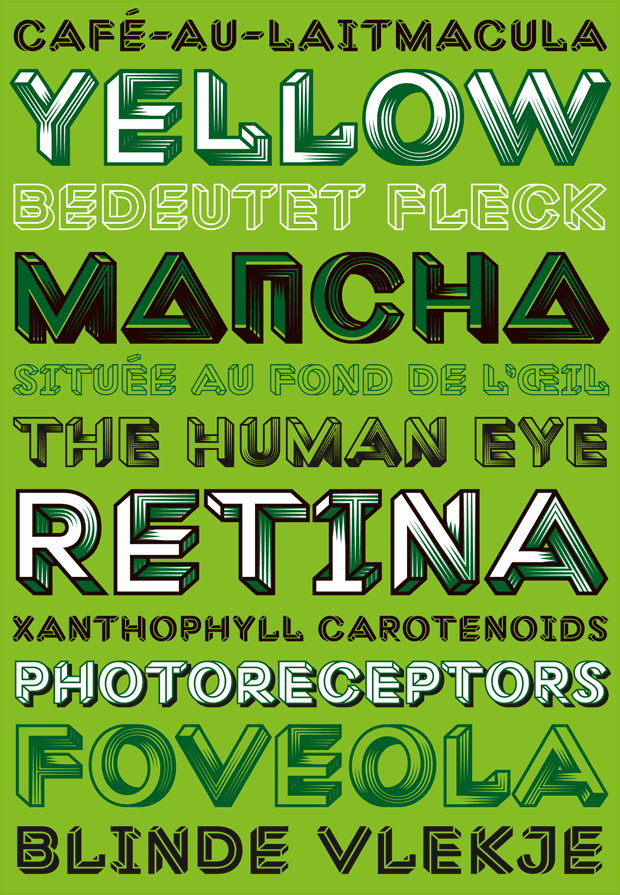
Macula can be described as the ‘impossible typeface’, since its design is based on the concept of impossible objects. This optical illusion was explored into great detail in the 1930’s by the Swedish artist Oscar Reutersvärd, and simultaneously made very famous by Dutch artist M.C. Escher.

Macula comes in five styles, some are great to use just by themselves and some are specifically meant for use in layers. By stacking different styles of Macula on top of each other, beautiful multi-coloured typography becomes possible.

Every character in Macula has been designed in two versions, and to enhance typographic liveliness these two versions are alternated automatically by OpenType features.

In addition, stylistic alternates for A, E, N and O are included. These will probably please all you hipsters out there! ;)

To celebrate the launch of Macula we are offering a special price of 35 Euros per font until the end of December!

More details: http://www.boldmonday.com/en/macula/

Have a very nice day,
The Bold Monday team
Not easy to do this concept justice, but the results are indeed very nice.

hhp

Thank you, Hrant.

Jacques

Very Nice Jacques, and really well done! Congrats, it's awesome.
These kind of optical illusions always fascinate me.
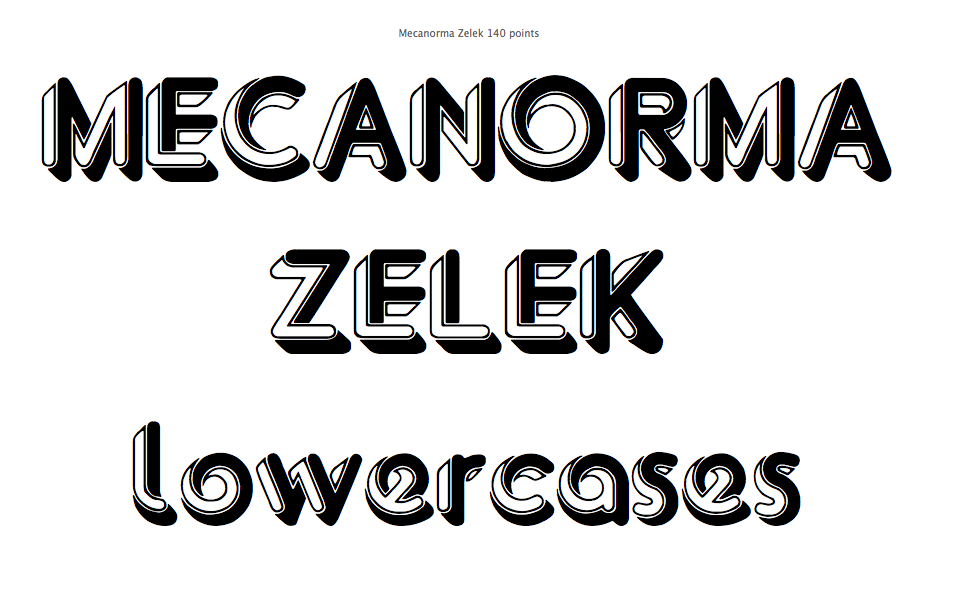
For reference, there is also an old Mecanorma typeface called Zelek that I guess you will find fascinating as well, it also explores this impossible style, but using rounded forms instead. If you want to have a look, here is a quick screenshot of the recently digitized Dick Pape's version

Hi Pablo,
thank you for your sample, but indeed, Zelek was known to me. ;-)

Jacques

Great challenge! Bravo!

@sim The challenge was not to use a modular system ;-)

Jacques

It's a very nice approach, the alternates add a good touch in keeping it interesting in words. Of course the shaded version looks most interesting (to me at least) since the line/filled version is a bit too even.

I quite like the method for shading, it's very simple but still give the illusion of shading.

Het was even puzzelen ;-)

Captured from web.archive.org on 16 Apr 2015. view this capture