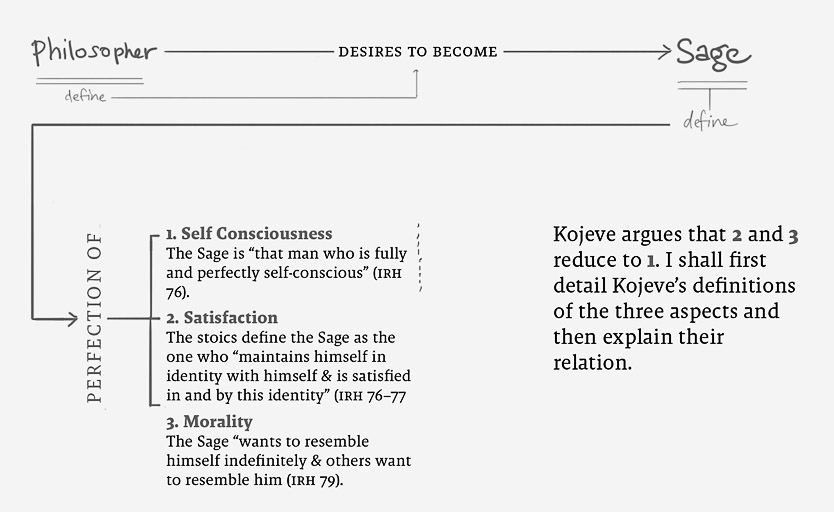
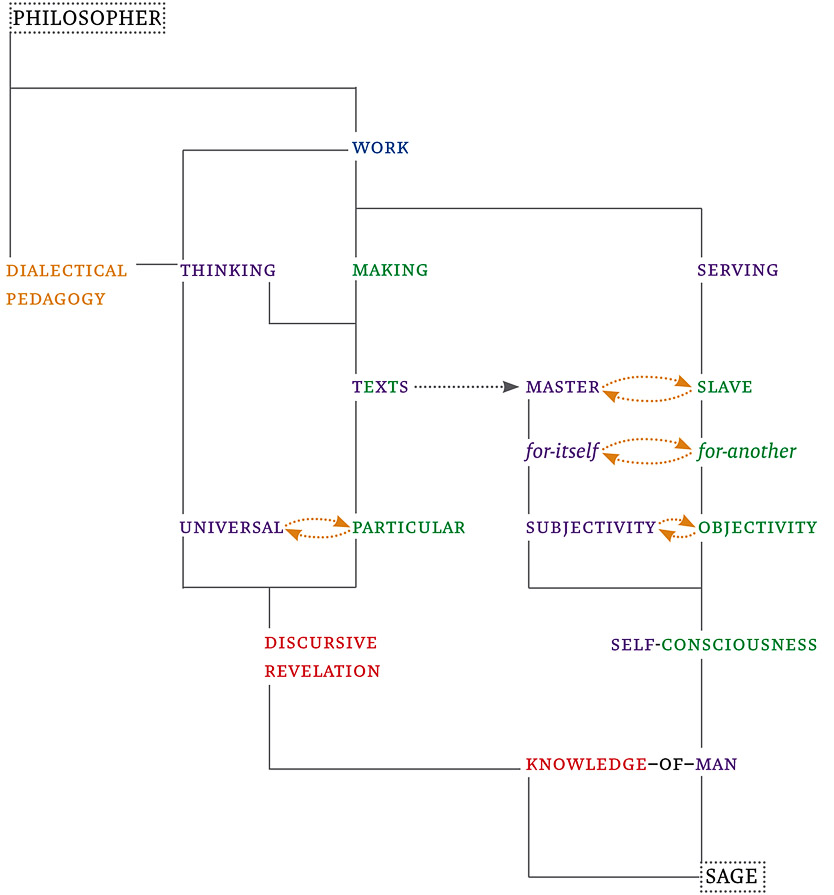
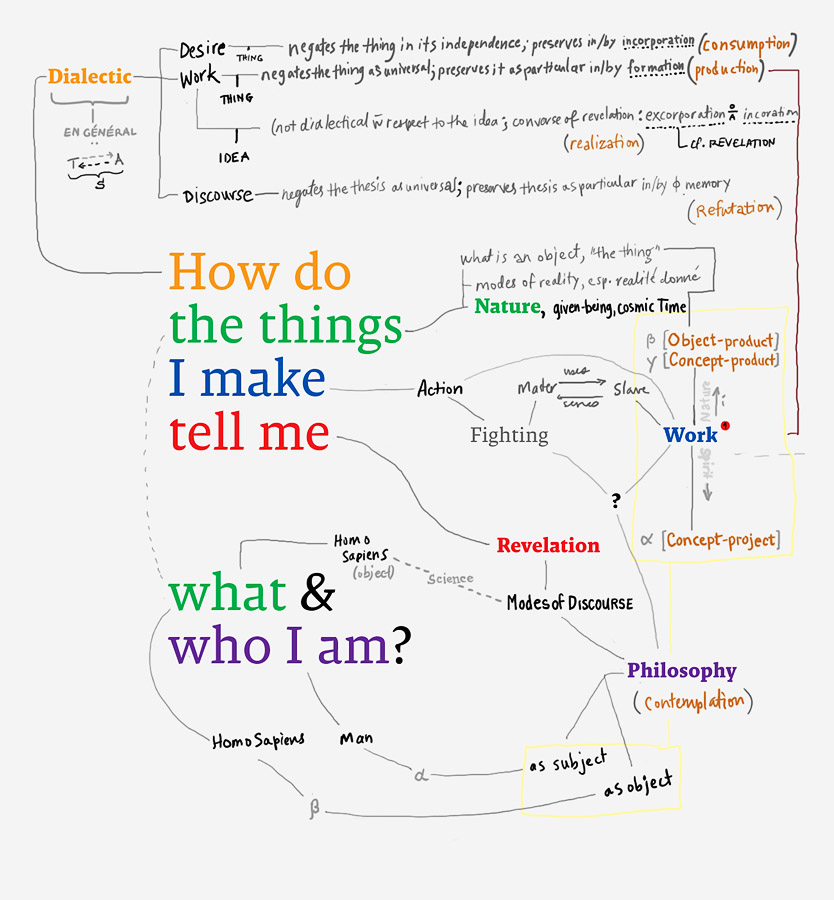
(Apologies for the length. For the short but incomplete version, just follow the bolds.)
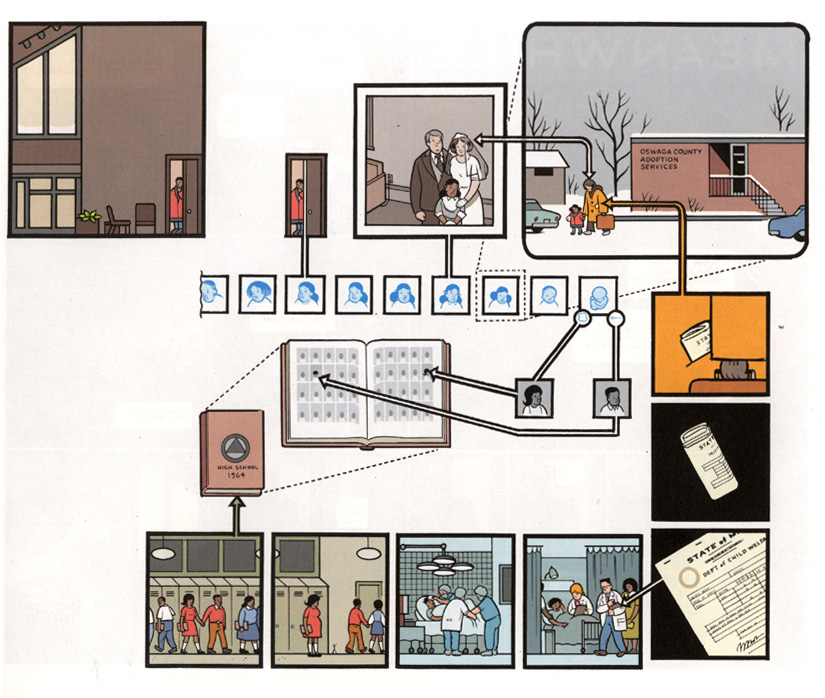
It seems that typographic criteria are an important factor in how philosophers distinguish scholarly from non-scholarly philosophical papers. First, scholarly articles use black text only. Probably because it is too expensive to print, I have never seen color in the body text of an academic journal. Second, visual structuring of the text is kept to an absolute minimum. The clearest visual cues to semantic or logical structure likely to be found are the numbers in sequentially numbered arguments. Lastly, diagrams are rare, always sharply separated from the body text, and usually redundant—clarifying as they do material already expressed in the body text. These tendencies reflect a desire to evade the influence of design on inquiry, to present the content of philosophical inquiry as somehow free from the constraints of having a visual form.
To make things complicated for myself, I’ve come to want to defend a conception of philosophy that demands I question the typographical norms of the academy. (In short, since philosophy seeks knowledge of self-consciousness, it cannot deliberately ignore the necessity of its products being physical and visual things. I will likely develop some of these ideas on my blog, rather than in a discussion forum thread.) But when I expressed interest in writing on this topic for my honors thesis, such that I would use the design of my paper as well as the written words to convey its argument, it generated somewhat of a controversy. Responses ranged from interest and encouragement to the warning that if my paper did not show up to the ball wearing a suit and tie, it would not even be admitted.
Consequently, I tried to find contemporary examples to justify my project: contemporary philosophical works that use their visual presentation as an integral part of their meaning. But except for Derrida’s Glas and Wittgenstein's works—hardly contemporary anymore—my search turned up nothing in the scholarly realm.
What seems to be the case most of the time is that when an artist or designer creates a text as an art or design object, they use whatever visual techne they can to construct a meaning as complex or simple as they desire to; but when it comes to writing as a scholar, the complexities and layers of meaning—or even improvements in clarity and reader engagement—that can be developed this way are immediately abandoned.
I can infer a number of reasons why this might be a practical requirement of articles that are to be printed cheaply in academic journals and their equivalent, not the least of which is that good design takes a lot of time. But it is unclear how one would justify these practical considerations as law, as practices both good for their own sake and definitive of philosophical practice. One would either have to maintain a Platonic distinction between ideas and their expression, or an arbitrary distinction between historically diverse forms and contemporary narrow forms of philosophical writing, or that philosophical inquiry is no different than scientific research (scientific papers being the exemplars of the scholarly journal article).
I apologize if this seems like a strange thing to post on the typophile discussion boards. Without offering my reasons for why I think the visual structure of a philosophical work is philosophically relevant, it might not seem very important. That having been said, my question to you is this:
Do you think there are scholars (especially philosophers) who do as I say—not just write about visual aspects of philosophical writing, as many unintelligible French authors do, but write inquiry visually—or do you think there are good reasons to maintain a mutual exclusivity between inquiry and design?
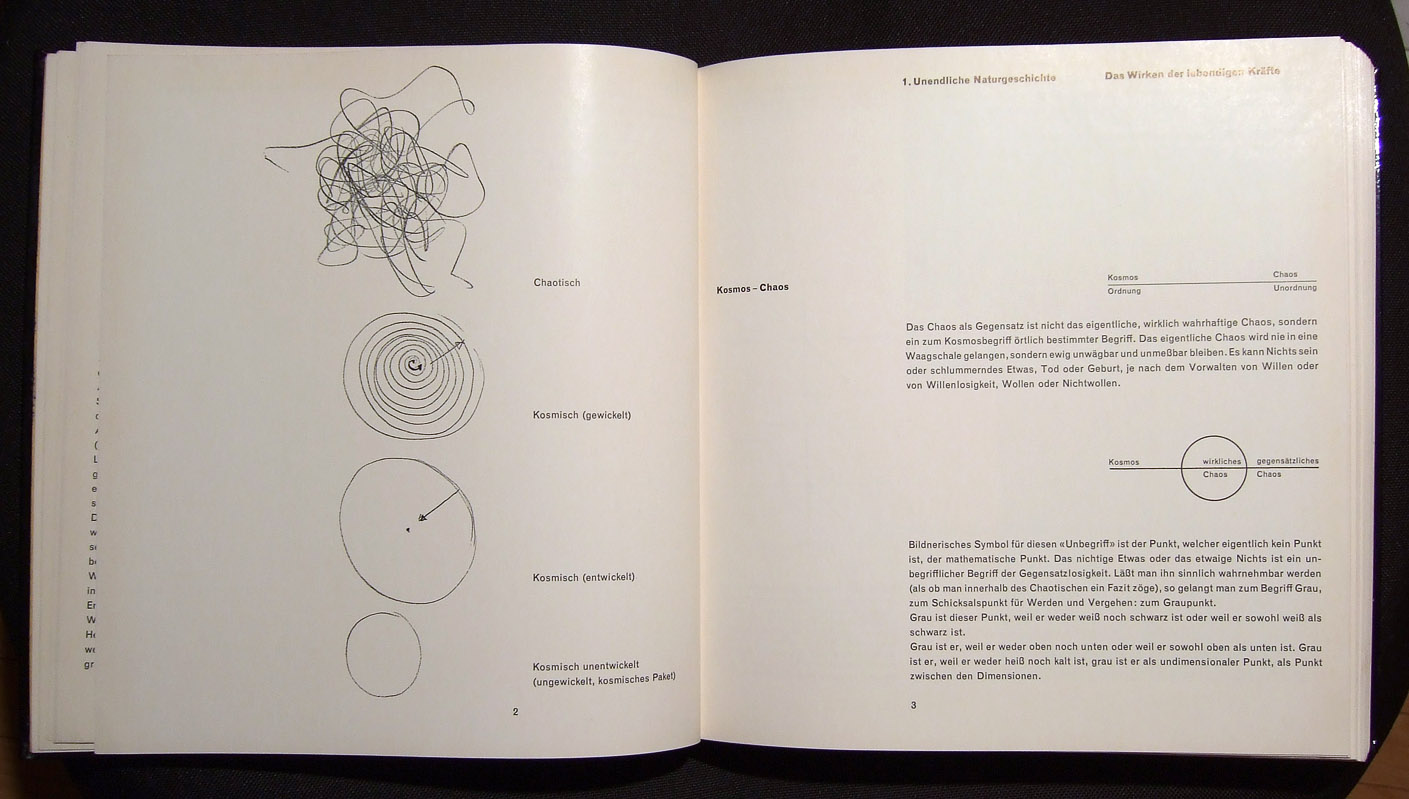
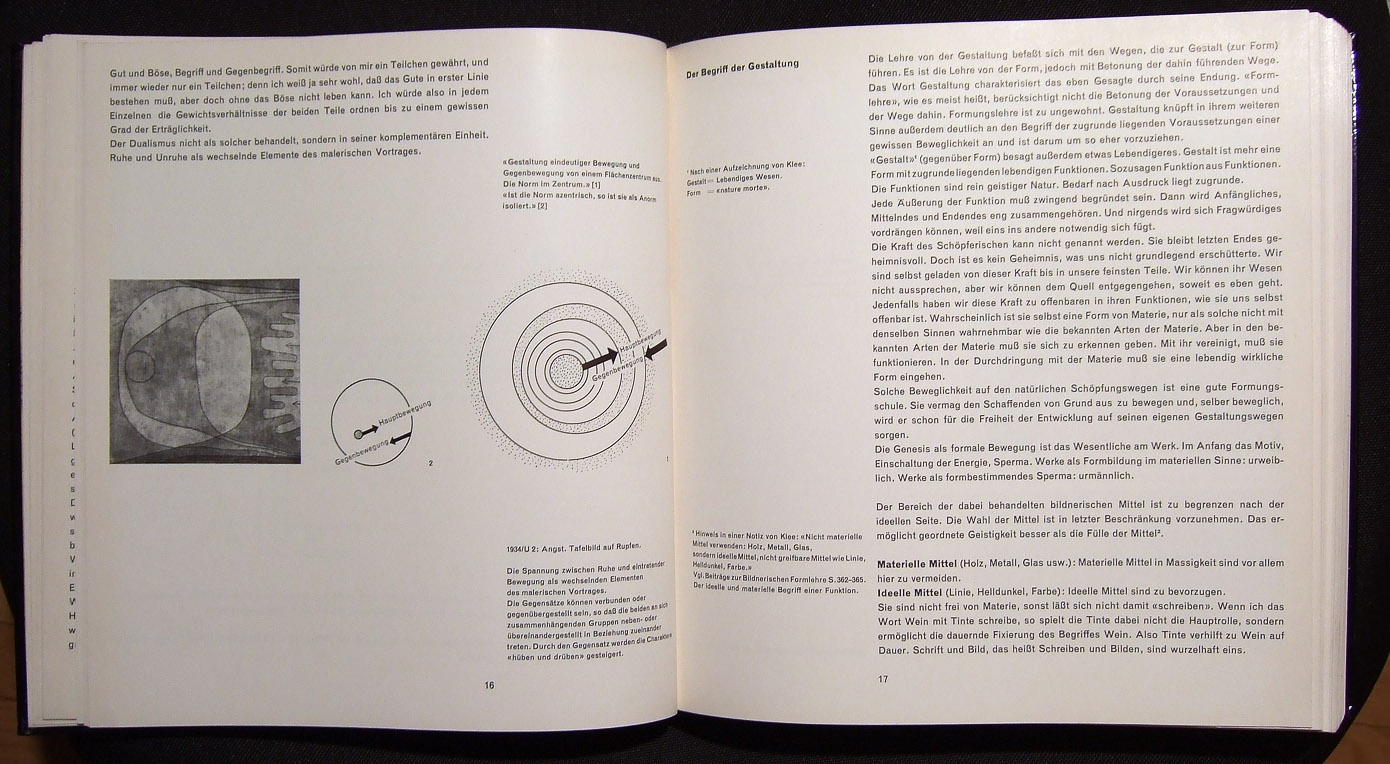
I've attached an example of a book that I think exemplifies one way graphic design can perfect inquiry: Das Bildnerische Denken by Paul Klee, designed by Robert Büchler. Here Klee’s writings and diagrams are given perfect expression by Büchler’s layouts and diagram redesigns. Obviously not everything could be produced at this level, but I don’t see this as a philosophical argument against trying.
| Attachment | Size |
|---|---|
| Klee--2-3.jpg | 188.12 KB |
| Klee--16-17.jpg | 270.49 KB |