I am creating a set of OpenType fonts for professionally typesetting Biblical Hebrew.
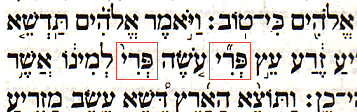
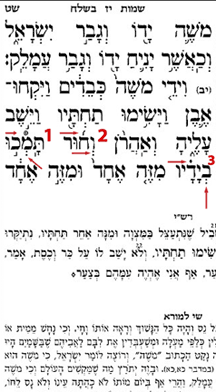
Unlike previous generations of computer-based typeface software, placement of upper taamei mikrah (or taamei mikrah positioned above the Hebrew aleph-beis characters) is no longer determined by the user of the left-to-right typesetting program. Even is cold-type, hot-type, or even computer-based film-type, placement was determined by the operator annd/or the typesetting program. The actual typeface was passive, and did not determine the exact positioning of the various diacritic markings, such as the nikkud, the taamim (trop), the meteg, or the shva-nah, etc.
However, in the newest generation of Biblical Hebrew typesetting, the operator/typesetter and/or the typesetting program does not determine the placement of the diacritic markings. The actual well-crafted OpenType Biblical Hebrew font determines the placement of the diacritic markings.
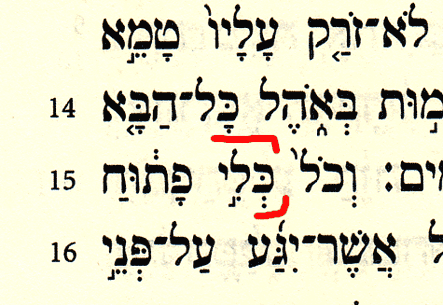
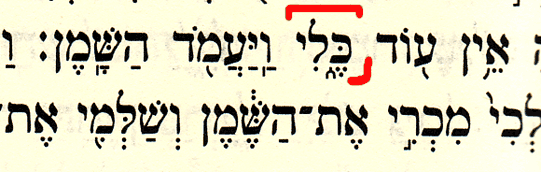
Since that is the case, I seek to know if there is a rule or wisdom governing the correct positioning of the placement of upper taamei mikrah.
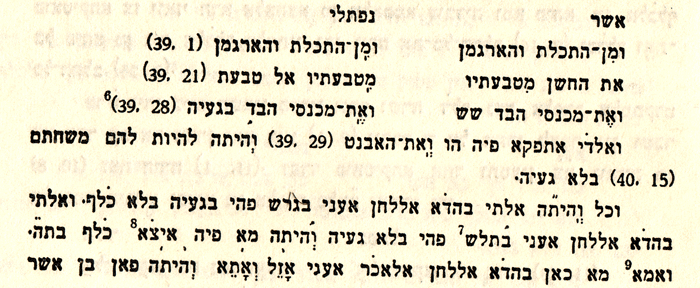
I have noticed in pre-computer age Biblical Hebrew books of the Hebrew Bible, the placement of upper taamei mikrah were often determined by where they would fit best. In most post-computer age Biblical Hebrew books of the Hebrew Bible, many recent books have made the placement of upper taamei mikrah on the far left hand side of Hebrew aleph-beis characters, in order to allow certain symbols to be placed above the Hebrew aleph-beis characters in the center.
It seems then that there are no hard rules or wisdom governing the correct positioning of the placement of upper taamei mikrah. Or, the earlier typesetters or typeface creators/programmers simply were unaware of any hard rules or wisdom governing the correct positioning of the placement of upper taamei mikrah.
Does anybody know if there are rules or wisdom governing the correct positioning of the placement of upper taamei mikrah? Pease share them with me, or inform me of the contacts with the appropriate scholars who do know.
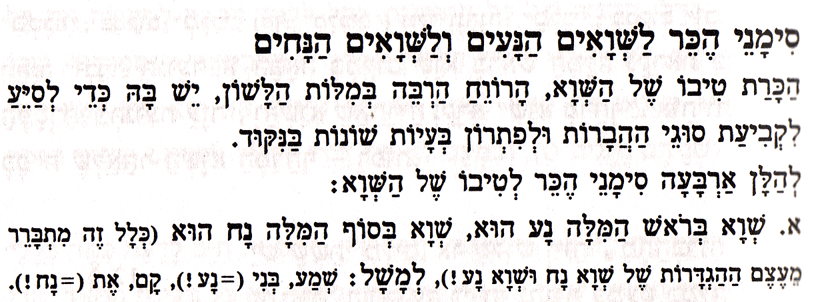
Similar, I am interested in the various rules for shva-nah, shva-nach, komatz katan, komatz gadol, hataf komatz katan, hataf komatz gadol, and any other grammaticalrules governing Hebrew.