Typophile

Information design: who is responsible when it fails?

npgraphicdesign

That was the roughly (not verbatim) the topic of my thesis. I wanted to explore the connection between the information designer and the audience, how the information is presented by the designer, how it is perceived by the audience, and who is responsible when the information is misunderstood. That was the written part. For the visual part, I selected a college campus (my old undergraduate university) and redesigned their map and wayfinding/signage system.

I decided to pick it up last night and reread it, almost 2 years later. Afterwards, I began to realize that despite my thesis committee kicking my butt with a plethora of revisions and pushing me to make this a great finishing stroke on my graduate school career, I only scratched the surface and maybe went a bit under. What I want to do is revisit my written part of the project in more depth as well as my visual part of the project. For my resources (and like a complete dolt I left my thesis at home and now I’m in a coffee shop doing a bit of research) I used Tufte, Ferdinand De Sassure, DAvid Crow, Saul Wurner, Nathan Shedroff, Josef Albers, multiple essays on information design from various authors in the last 200 years or so, explored semiotics, cognitive thinking, etc. There are a few others that I’m simply forgetting to mention.

Any suggestions on additional resources that I could use to expand on my thesis?

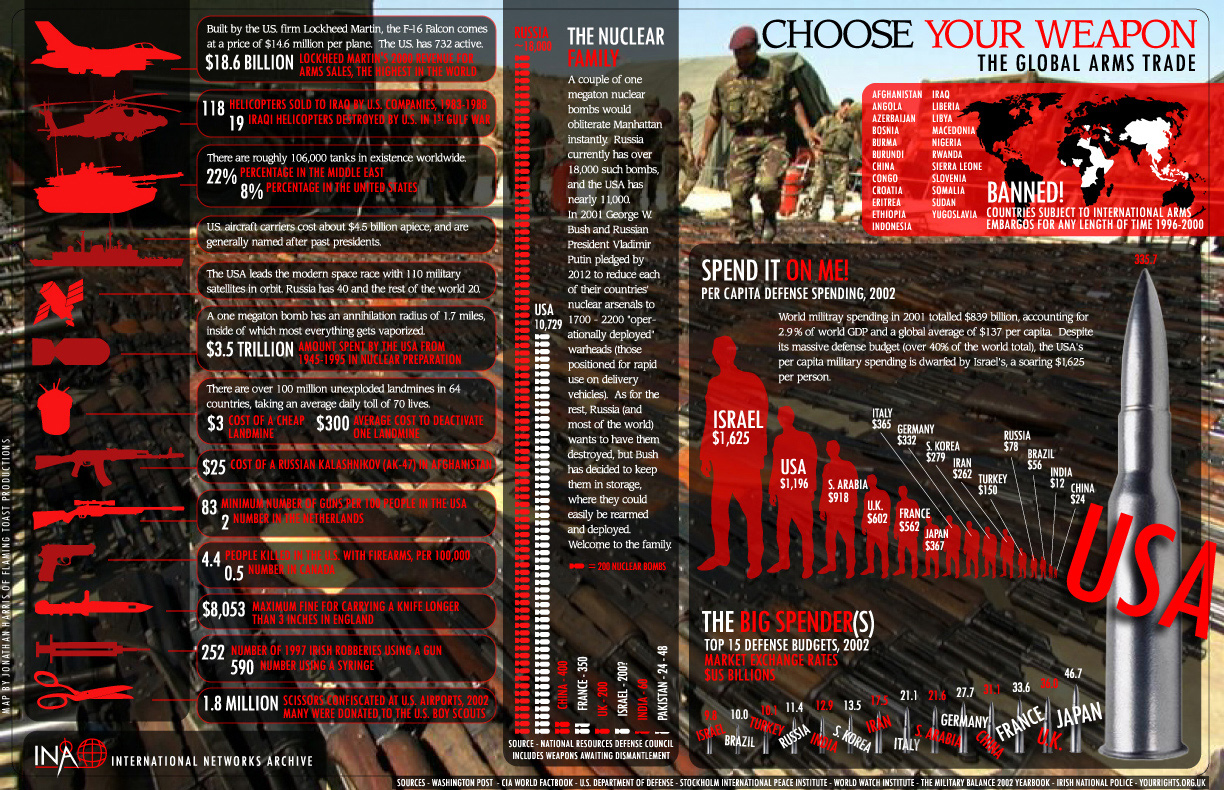
I wonder if the information design used in planning the Iraq War is available to researchers? Not thinking about aircraft carrier banners or UN PowerPoints, but the information design used in planning the war. It would be interesting if blame could be assigned to designers rather than the generals.

I wonder if the information design used in planning the Iraq War is available to researchers?

Mapping aside, I doubt that much information design was done. Given the agencies involved, it’s likely that everything was just dumped into basic Word templates and/or Excel Spreadsheets. And given the statements made by the people who planned this Iraq war during the first Iraq war, it seems like they understood the information really well.

There is a very interesting book about visual perception, but you’ve to know read french or german: »La loi et ses conséquences visuelles« – „Das Gesetz und seine visuellen Folgen” (... The law and it’s visual consequences or effects)
It has been a project of research of the Academy of Visual Arts in Leipzig (Germany) and Zuerich University of Arts (Swizerland), directed by Ruedi Baur. Published by Lars Mueller.

http://www.amazon.com/Gesetz-visuellen-Folgen-conséquences-visuelles/dp/3037780436/ref=sr_11_1/002-2429251-4749649?ie=UTF8&qid=1194020760&sr=11-1

nora,
any idea if a copy of this book exists in english? My german stops at wundabar!, and my french is not much better...

As far as I know, there is no

Captured from web.archive.org on 3 Dec 2008. view this capture