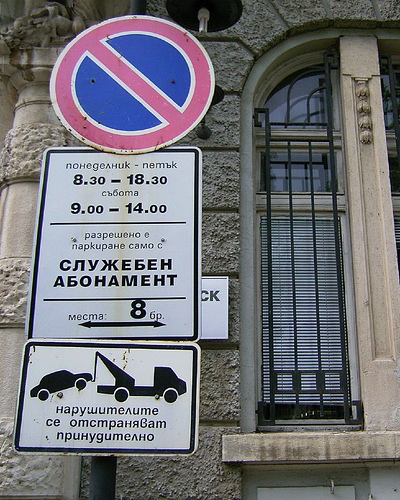
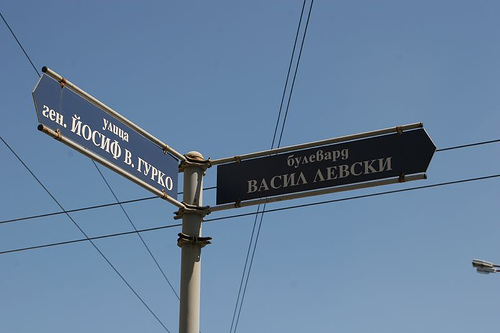
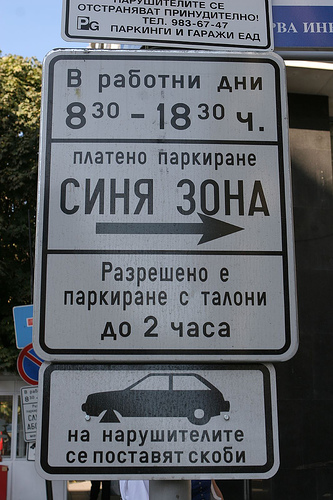
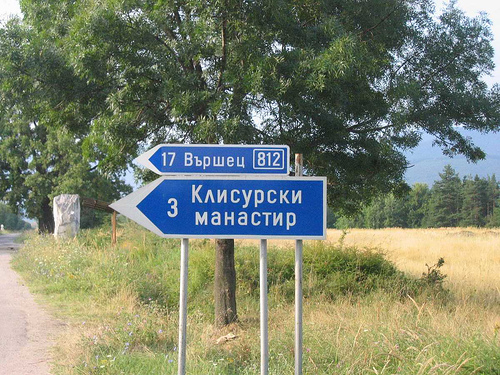
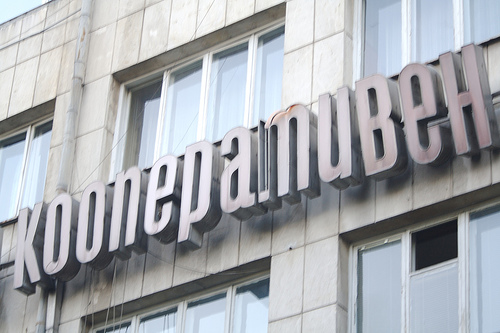
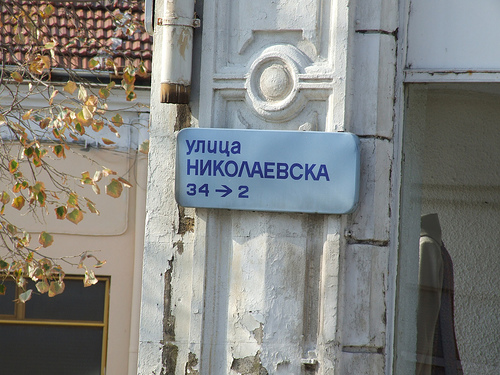
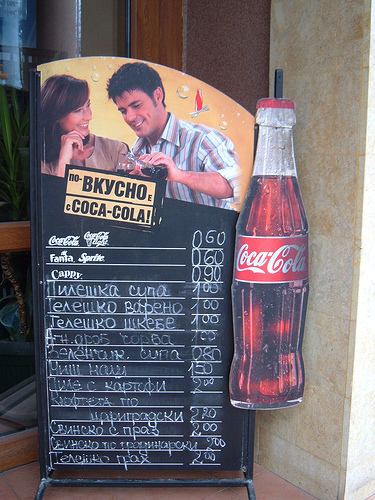
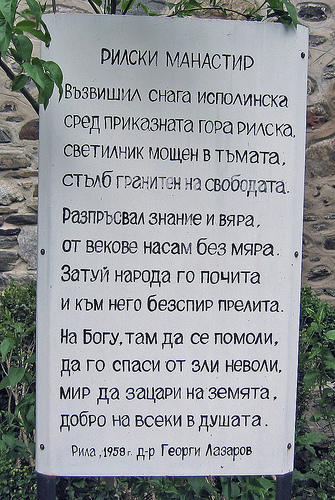
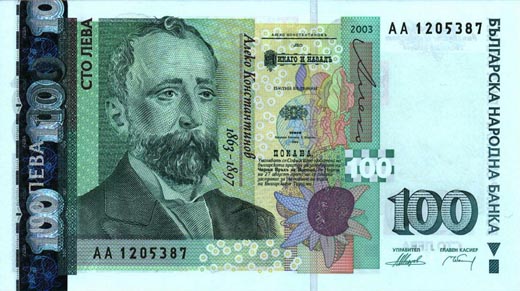
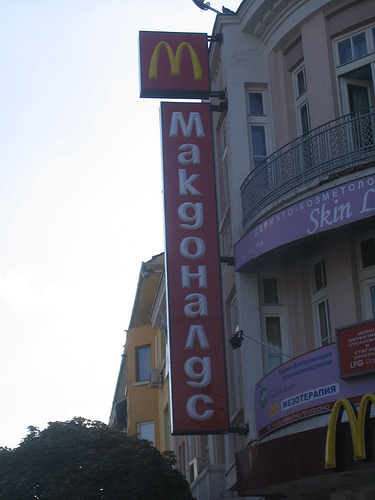
An extensive search of "Bulgarian Alphabet" (in English) on the Internet reveals that the "standard" Cyrillic alphabet and fonts are used in Bulgaria. There is nothing peculiar, except if one happens across the Hermes type foundry, or visits Bulgarian-language Cyrillic web sites and notices plain type styles with seeming Latin intrusions.
Hermes, in Bulgaria, is a quality outfit, with a good range of type styles, and all of them utilize a special Bulgarian alphabet.
In it, eleven upright ("roman") characters differ from the usual Cyrillic form, by using the Cyrillic italic forms -- either just straightened up, or with extenders, or stretched. In general the effect is one of Latinizing, despite the italic and script precedents for Cyrillic ascenders.
Also, there are at least eight accented/stressed characters (with grave accent) which are either not otherwise stressed in Cyrillic, or stressed with the dieresis instead.
Details of how to substitute these characters in OpenType fonts have been provided in the Build forum -- but I am interested here in the history, politics, people and practicality of the whole situation.
This is a movement which requires a group of type designers to be on side, as well as the local design community, and scholars, educationalists, orthographers, and government to some extent.
So what's the story?
How well established is the Hermes-flavoured Cyrillic alphabet in Bulgaria?
And now that Bulgaria is in the European Union, will the Hermes-promoted Bulgar-Cyrillic alphabet become more entrenched there, and possibly make inroads elsewhere?