I’m typesetting a German-language book which – somewhat atypically – uses initial dashes (instead of quotation marks) for direct speech. I’ve been asked to use this system before, typically in translations from Scandinavian languages where this is, I believe, more common. In this case it’s the author’s preference.
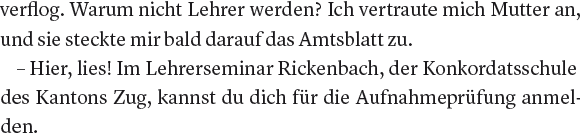
Here is an example from this current book – the second paragraph is dialogue:
Additionally, there are some names, terms and expressions that are typeset in guillemets throughout the book. So far, so good, but now the question has come up what happens when such a guillemet-quoted expression stands within the dash-led direct speech:
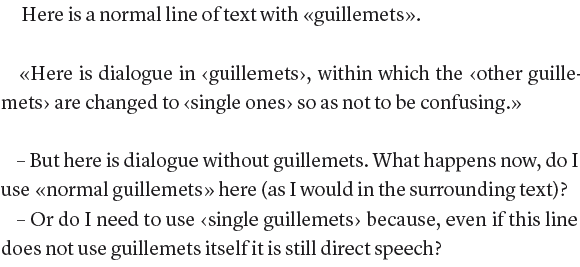
The editor and the proofreader think that it should be just single guillemets because they’re nested within direct speech. On the other hand, my line of reasoning so far is that the nested ones would only need to be reduced to singles if they’re nested within actual guillemets, so that the levels of guillemets don’t get confused. Since we’re not using guillemets for direct speech, this does not apply.
In other words – I think the replacement of double guillemets with single ones is determined by typography (nesting within other quotes), while they think it’s a semantic thing (nesting within direct speech).
Perhaps someone more familiar with this practice can shed some light on the issue? I’d be thankful.